Public Art Installations
Explore my large-scale Tlingit Formline murals bringing cultural art into community spaces across Washington State.
For Mom
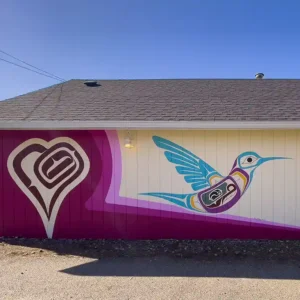
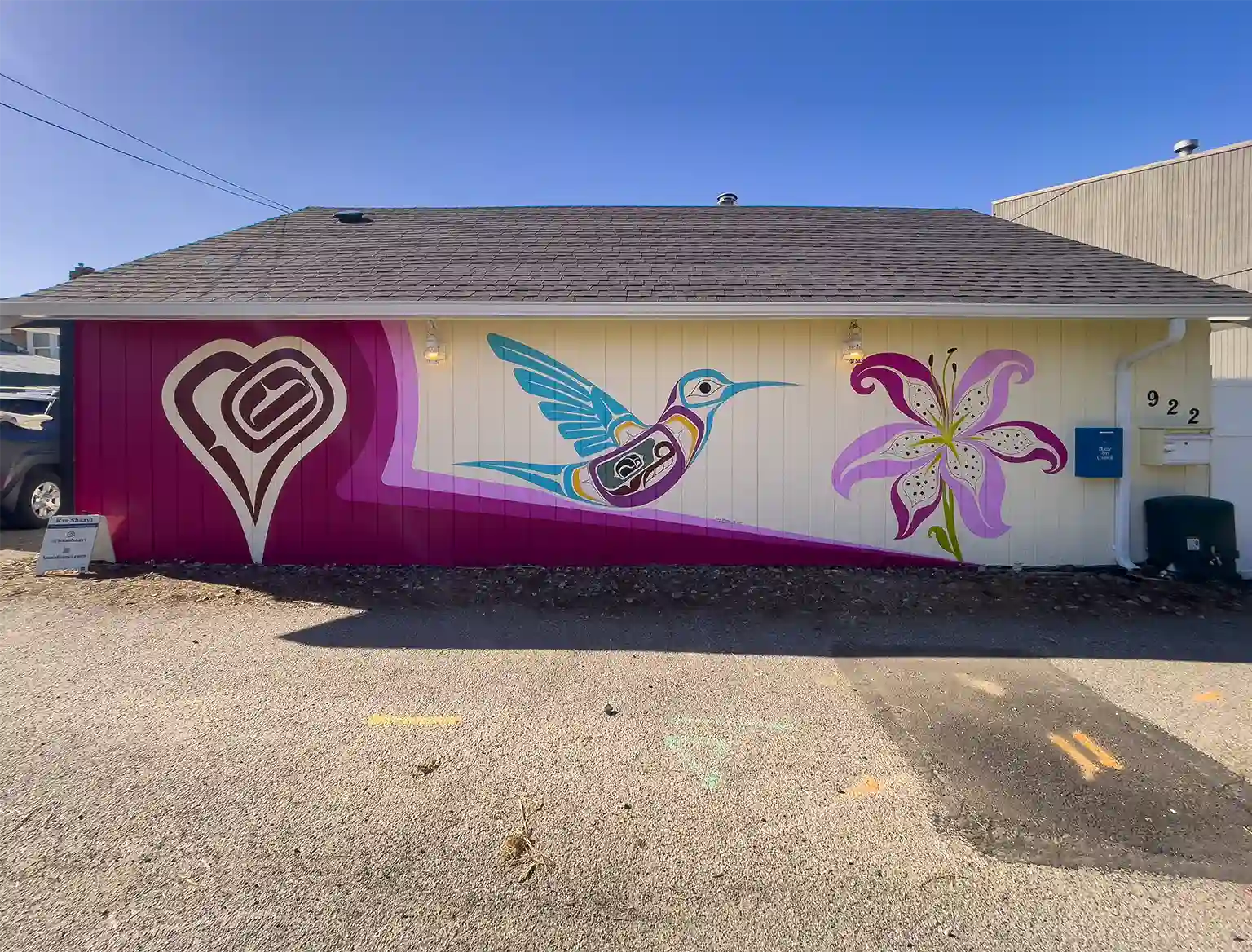
Blaine, Washington | OverAll Walls 2024
This mural features a healing heart and hummingbird designed in curvilinear Formline, the visual language of my Tlingit ancestors. I chose bold reds, magentas, pinks, and teal to transform this overlooked alley into a vibrant space. The name “For Mom” is deeply personal. While I’m Tlingit through my father’s lineage, Tlingit culture is matrilineal, creating unique identity challenges. The healing heart represents this journey and the healing that comes with understanding complex identities. The hummingbird symbolizes the freedom of my spirit’s connection with nature, bridging my Tlingit heritage with the world around us. Find it in the alley next to Blaine Arts Council Gallery at 922 Peace Portal Drive.
Fluke’s Vision
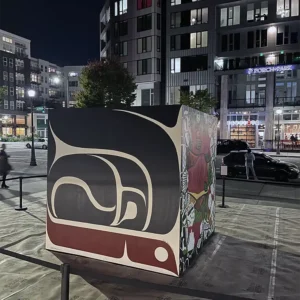
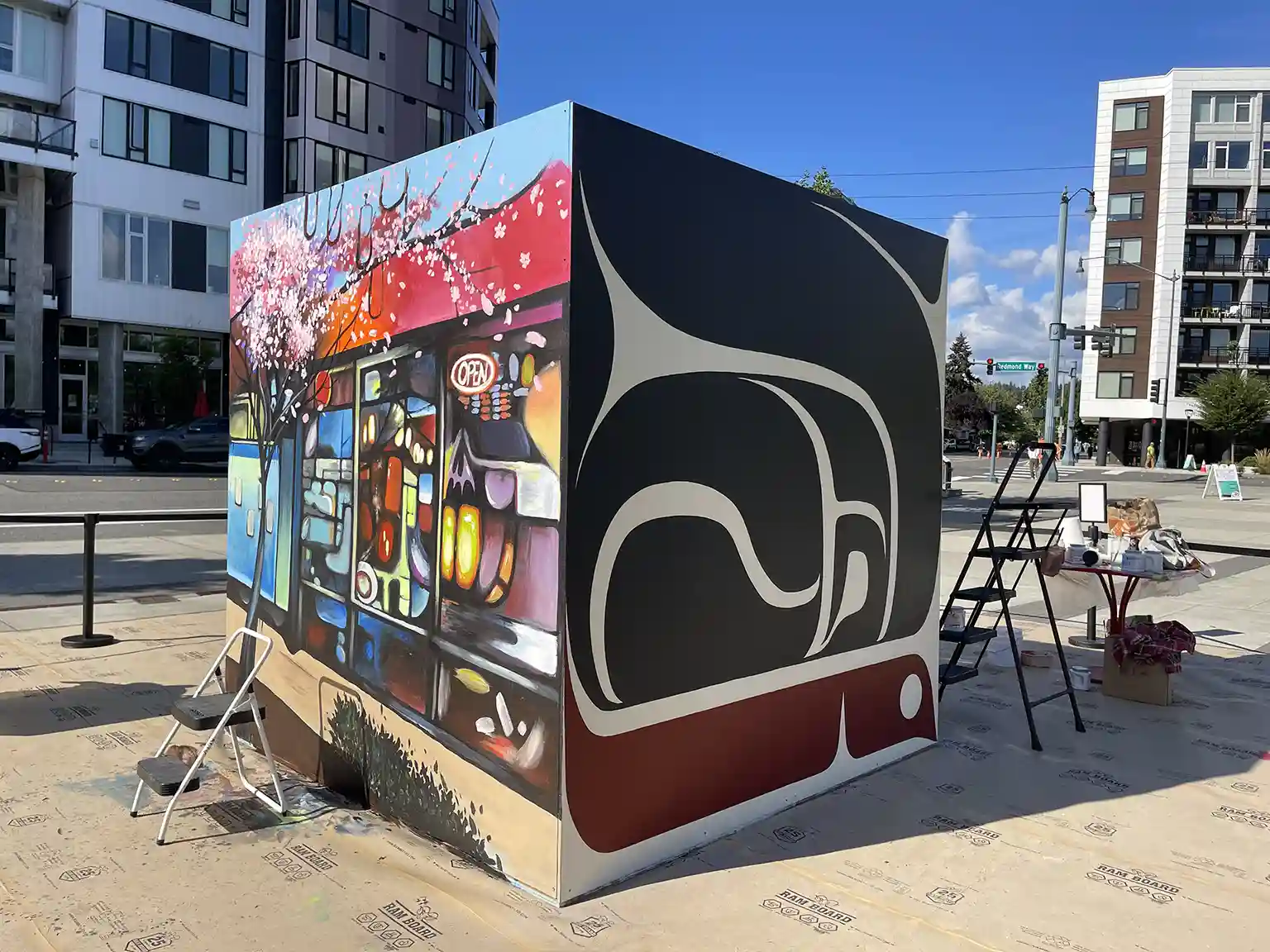
Redmond, Washington | Downtown Art Walk 2024
This 8′ by 8′ mural was created live during Redmond’s 2nd annual Art Walk, bringing Tlingit design into the heart of community celebration. The piece draws on traditional Tlingit colors: bold red and black on a yellow cedar-toned background, with my signature “questioning eye” at its center. Sweeping curvilinear forms recall the powerful fluke of a whale while incorporating shapes found in customary Formline designs. I chose an abstract approach deliberately. At first glance it appears contemporary, but closer inspection reveals traditional elements, sparking curiosity and conversation. This temporary installation was like a visual artist’s live concert. It was special because you had to be there in the moment.
Wisdoms Embrace
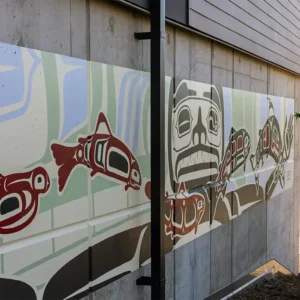
Bellingham, Washington | Laurel Forest Village 2024
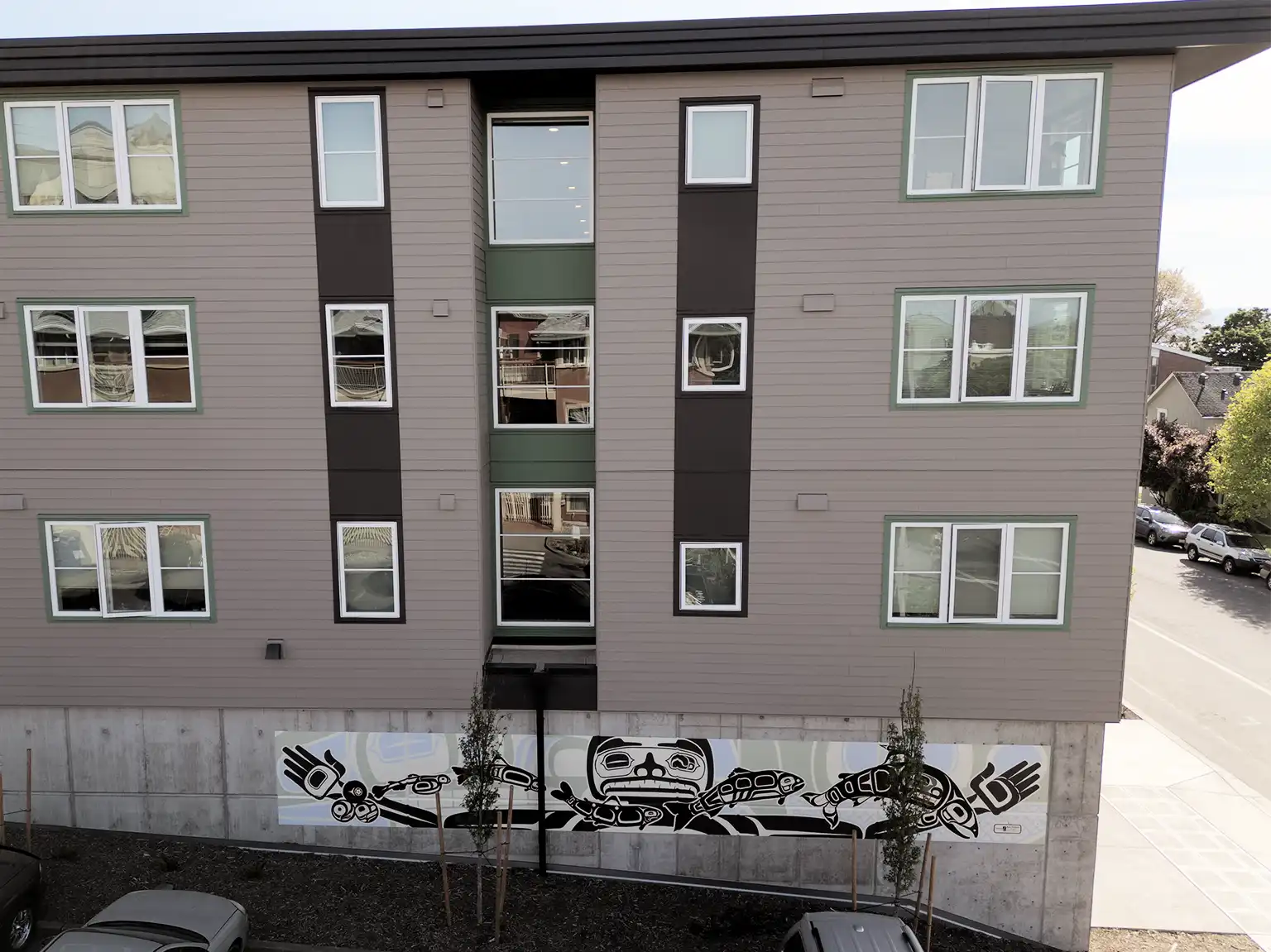
This 5′ tall by 38′ wide mural adorns the concrete foundation of an affordable housing development for seniors at 1000 N Forest St. The design features a Formline-style spirit face with arms stretched across the entire span, representing the wisdom of senior residents embracing multiple generations. Within this embrace, you’ll find a lifecycle of salmon: eggs, alevin, fry, parr, smolt, and adult. These represent both the deep connection between Pacific Northwest peoples and salmon, and the stages of life itself. The younger salmon stages symbolize children from the co-located childcare center and broader community. The color palette blends traditional Tlingit reds and blacks with colors from the building itself, echoing the project’s goal of bridging generations and cultures.
Long in the Tooth
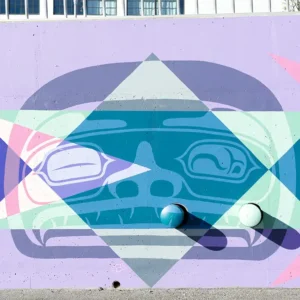
Bellingham, Washington | Indigeversal Collective 2023
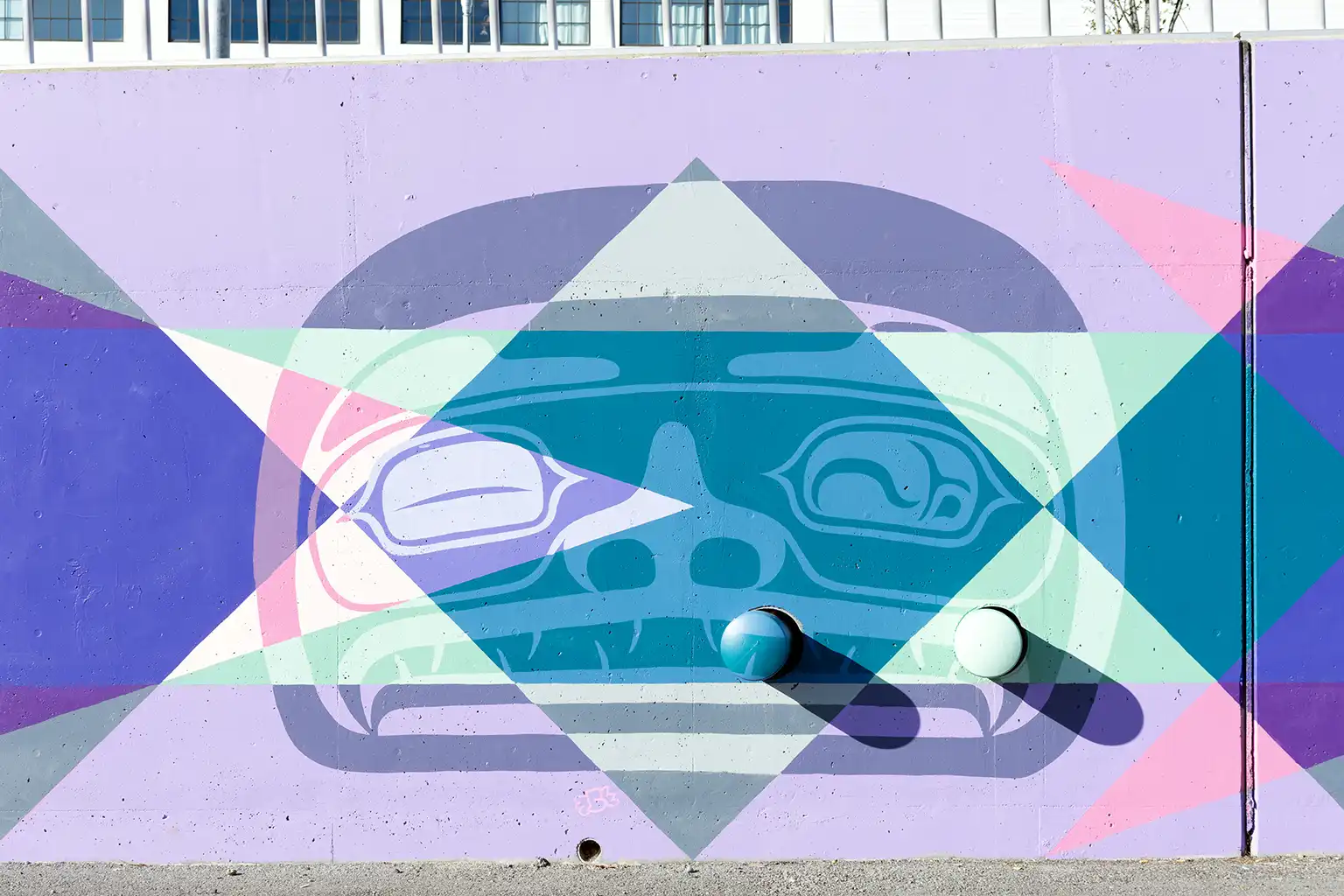
This is my section of a 150-foot wide collaborative mural at Bellingham’s waterfront pump track, created with six other Indigenous artists. I contributed my signature “Long in the Tooth” design, which is a variation on the Tlingit Spirit Face found in Formline designs. The face uses traditional Formline elements. If you cover one side, it appears as a profile with the top of the lips curving up to form nostrils and the bridge of the nose extending into the eye orbits. Instead of traditional “chicklet” style teeth, I used long, thin teeth. Hence the name, meaning “old” Spirit Face. One eye contains my “questioning eye” motif, reflecting cultural disruption and the need to view things from both Indigenous and contemporary perspectives.
Ancestral Spirit
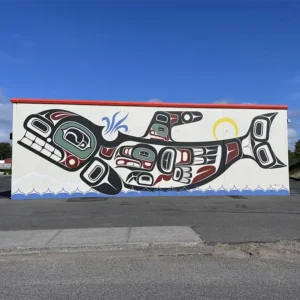
Ferndale, Washington | Kevin’s Car Wash 2023
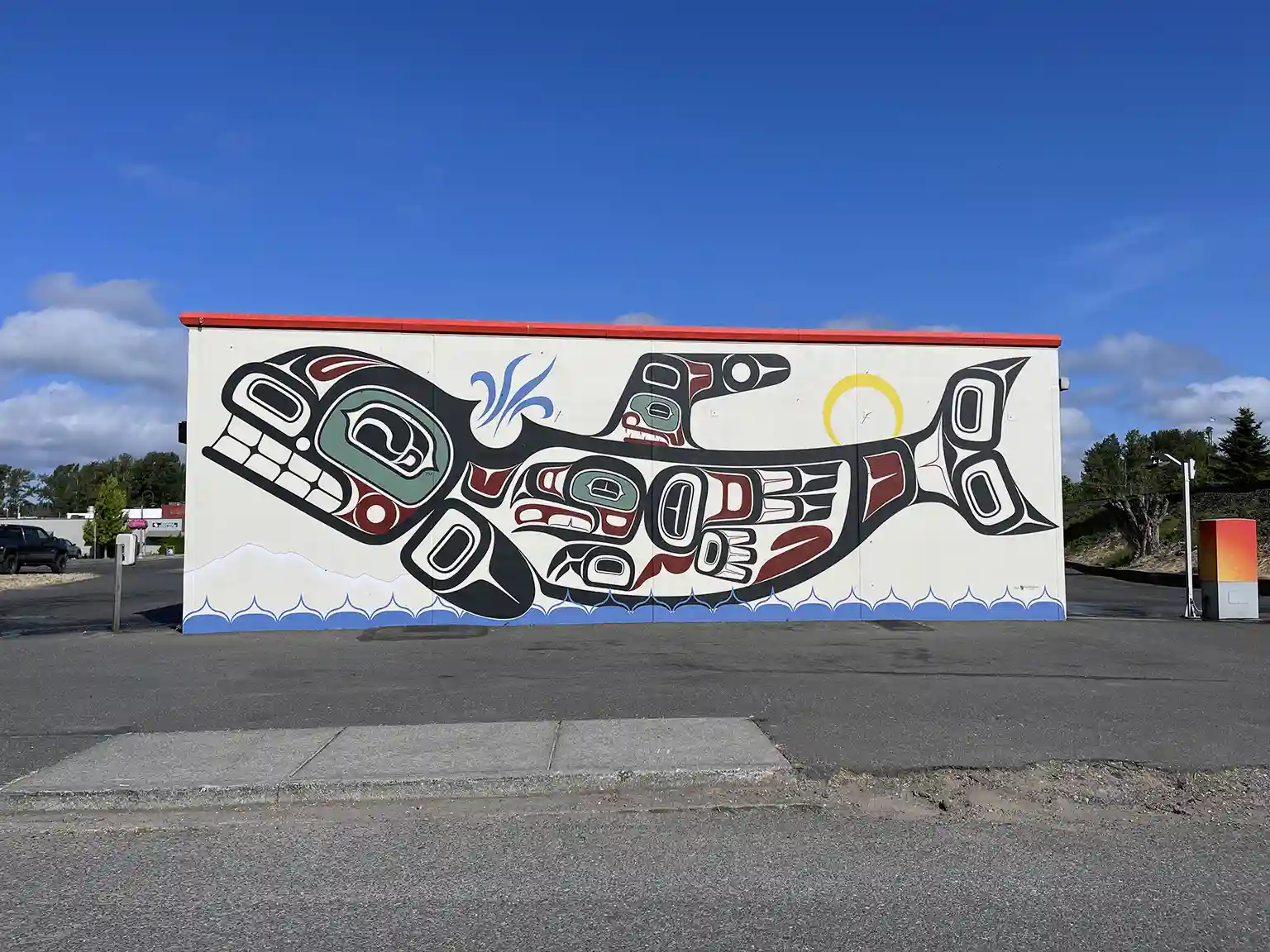
This 43-foot wide mural features a Kéet (Orca) as the primary design, created after comprehensive research at the Burke Museum in Seattle. Inside the Orca, you’ll see a Cháak (Eagle), which serves as both an artistic element and a symbolic nod to the Tlingit Eagle moiety of Kevin Lee, the car wash owner. Together, the Kéet and Cháak provide a visual dialogue while honoring the complexity and richness of Tlingit culture. These animals hold significant spiritual and social importance in Tlingit tradition. They’re more than beautiful creatures, they’re connections to our heritage. This collaboration between two enrolled Tlingit Alaska Natives brought our cultural art into an everyday setting, offering Ferndale residents and local Tribal members a moment of recognition and connection.
Boxhead Happy
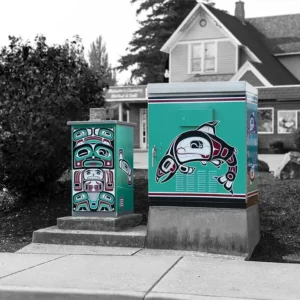
Ferndale, Washington | Traffic Control Box Wrap 2023
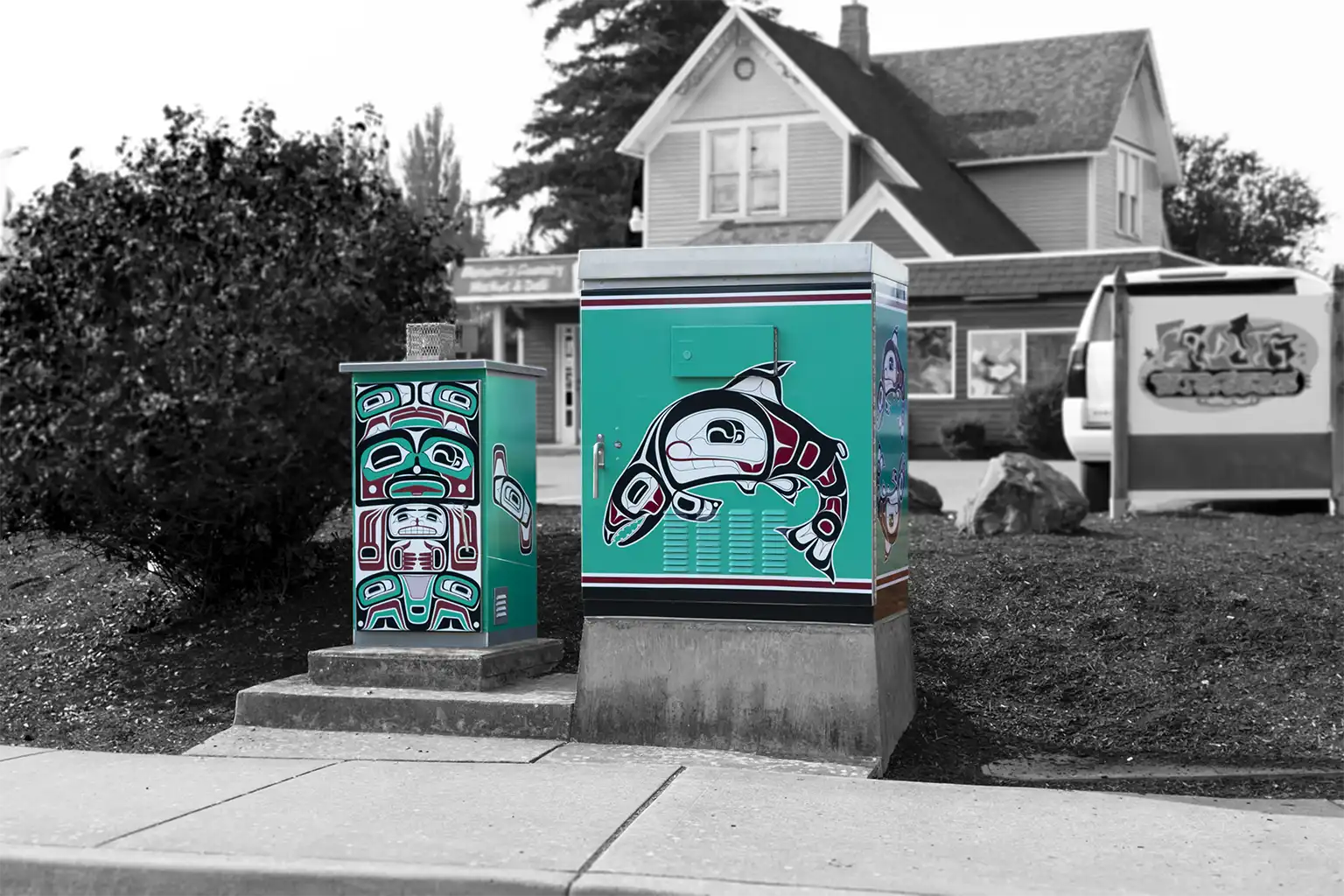
At the intersection of Douglas Rd. and Main Street, you’ll find two traffic control boxes wrapped in my designs, selected by the Ferndale Arts Commission. “Boxhead Happy” is my interpretation of a traditional bentwood box design in tall, vertical format, featuring a spirit face with hands turned inward holding a heart. The hands represent care and empathy, while the heart symbolizes love for my local community. On the neighboring box, a Formline chum salmon design represents the holistic connection between people and nature fundamental to Native cultures in this region. I chose the location specifically because it’s on the way to Lummi Nation. These boxes are a visual reminder that Native people are still here and an integral part of the local community, dedicated to the Tribal youth of this region.
Patreon
KaaShaayí on Patreon – Click this link
See the design process and community stories behind these murals on Patreon.